
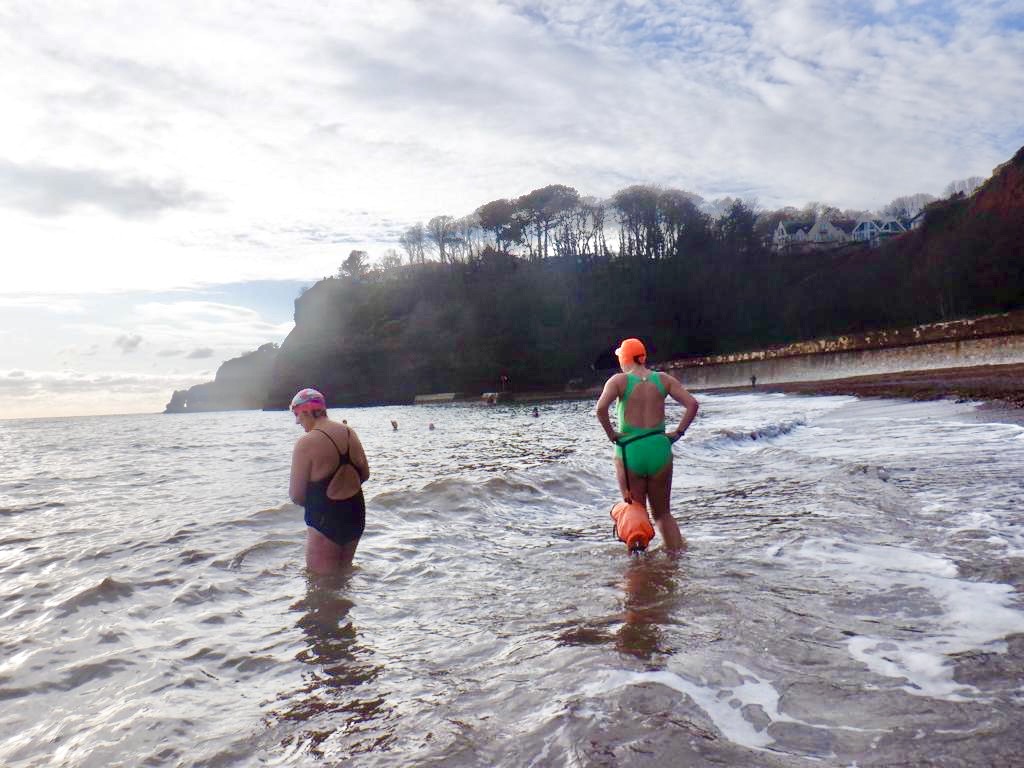
Autumn and winter swimming feels wilder and more demanding, it certainly takes more prep, but it can also be the most rewarding time of the year to sea swim. With the right preparation and mindset, colder seas can add some magic to your life, and a huge sense of joy. Here’s how to make the most of the season while keeping safe.
1. Know Your Temperatures
In Devon, on average the sea reaches its warmest in September at around 17–18°C. By November, it usually drops to 13–15°C, and by March the average is closer to 9–10°C. These numbers might not sound dramatic on paper, but it’s surprising just the difference 1 degree makes! Your swims will naturally get shorter as the water cools.
15°C or less is classed as ‘cold water’.
Check the latest readings for your sea here:
👉 Sea temperatures in the UK– seatemperature.org
2. Swim with Others
Swimming with others is advisable when you can. This is especially important out of season when there are no lifeguards on the beach. If you do swim solo, make sure you tell someone where you’re going and when you’ll be back. Better still have a spotter on the beach.
3. Plan Your Exit Before You Enter
Before you get in, take a moment to think about how and where you’ll get out. Waves, currents, and cold can make exits tricky, so a little foresight makes everything smoother. It’s just good common sense. I spend a little time, and picture myself getting out. Long stretches of beaches – with lots of space to get out, or cove? Is there drag, can you spot a shelf where the waves are landing? 2 minutes well spent.
4. Adapt Your Distance and Style
Adapt your swim to the season, whether that means shorter dips, a steady breaststroke, or just floating and enjoying the view. Time in the water is personal to you and will change day to day. Just because you managed 10 minutes last week doesn’t mean to say that you can follow suit every time. Be aware of your own limitations. AND, watch out for the people around you. If in doubt call for help. The coastguard is an emergency service so it’s a 999 call.
5. Have Your Kit Ready
Cold water swimming is as much about aftercare as it is about the swim itself. Get dry and dressed quickly. You will continue to cool even 20 minutes after exiting the water. Leave the chatting until after you are fully dressed. I always have:
- My cossie or wetsuit and a bag to take it home in.
- Tow float – for visibility and you can get dry bag ones, for your valuables – I do double bag them (and it’s great to have a little friend alongside!). I have this Hut tow float.
- Ear Plugs – Protect your ears from infections and surf ear – I use Surf Ears and Alpine ear plugs, because I like the way they fit (they have size options) and the leash is a must for me. Link to surf ears and Alpine Ear Plugs, which are a little cheaper and seem to be great so far!
- Water shoes – I like these Brighton Water Shoes.
- A big towel
- Lots of warm arm layers and a woolly hat (gloves when it’s cold)
- Easy shoes or boots and warm socks
- A warm drink in a flask
My extra cold water kit (this has built over time!):
- Hand warmers are always in my changing robe pockets. I have chargeable and reusable ones. I use them to get my hands back into working order (required to get myself dressed!). Reusable hand warmers and the Chargeable hand warmer.
- Neoprene boots/socks – I’m a fan of neoprene boots, keeping the extremities warm and protecting my feet. You can choose 2mm – 5mm thickness. TOP TIP – you can wear pop socks underneath so they’re easier to get on and off. I’d recommend finding ones with flexible soles. I like these neoprene booties 2mm from Cressi, or these 3.5mm Zone 3 Socks
- Neoprene Gloves – I’m not a fan of neoprene gloves – it makes me feel like I can’t catch the water – but many in my swim community swear by them. Try these 3.5mm Zone3 pair.
- Little hot water bottle (and a flask of hot water) – a gift from a swim friend and again, a game changer. You don’t have to have a koala (but it helps). I wrap this around my waist, so it sits on my lower back. Love it! Mini wrap around hot water bottle.
- Flask/Cup – I use this 720 flask because it keeps my tea super hot and the clicky lid means I can drink it without having to decant it – hard to do when you are shivering! I’ve always found it secure and it fits in my car cup holder. 720 thermos cup
- Neoprene Cap – I double-hat with this on top of a normal swim cap. The Orca orange neoprene cap is my go-to (no chin strap, more visible in the sea). Orca Orange Neoprene cap
- Mask style goggles – these cover up the space between your eyes and I find this vastly reduces a shocking ‘ice-cream’ headache. Game changer for me! I tend to wear Aquashere mask-style goggles.
- Shorty wetsuit – I have a couple of swim wetsuits but this little surf wetsuit has been a great addition to my swim kit. I’m not recommending this for long swims but it is a cheaper option to take the chill off, and I find it easy to get out of. This Gul Shorty has been great! Or try this Two Bare Feet shorty.
The golden rule: it’s not just about what you wear in the water, it’s about how quickly you can get warm afterwards.
6. Respect the Sea
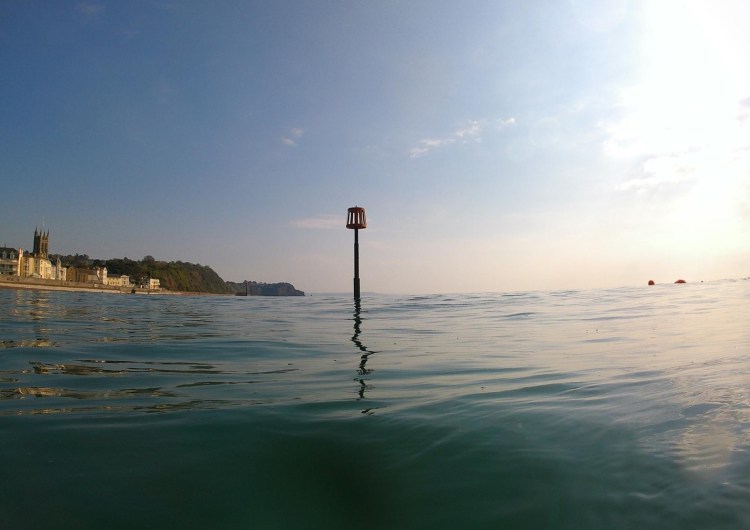
Autumn and winter bring shifting tides, stronger currents, and bigger swells. Conditions can change quickly, so check forecasts and tide times before heading out. Always swim to your own level and never feel you have to push it “just because.”
7. Embrace the Cold
The cold is part of the experience. It challenges your body and mindset, lifts your mood, and leaves you buzzing with endorphins. Each dip brings its own mix of challenge and joy and over time, you’ll learn your limits, discover your favourite kit, and figure out what you want from your swims.
Remember the weather conditions will dramatically affect how you feel, so think about wind chill and air temperature, not just the dipping sea temperatures!
Cold water swimming isn’t about endurance or distance. It’s about finding resilience, reconnecting with yourself, and rediscovering joy in simple, powerful moments outdoors.
If you’d like support to build your confidence in open water and learn how to manage colder swims safely, I offer 1:1 coaching and Walk-Talk-Dip sessions in Teignmouth and along the South Devon coast. Together, we’ll find the approach that works for you.
The sea is waiting — even in winter.
Read more about staying safe in open water from the Outdoor Swim Society. and keep an eye out on pollution warnings.
Affiliate Disclosure:
As an Amazon Associate, I earn from qualifying purchases. This means if you click on a link to Amazon and buy something, I may receive a small commission at no extra cost to you. I only recommend kit and products I use and trust myself.
Discover more from Outdoor Swim Coach
Subscribe to get the latest posts sent to your email.
